







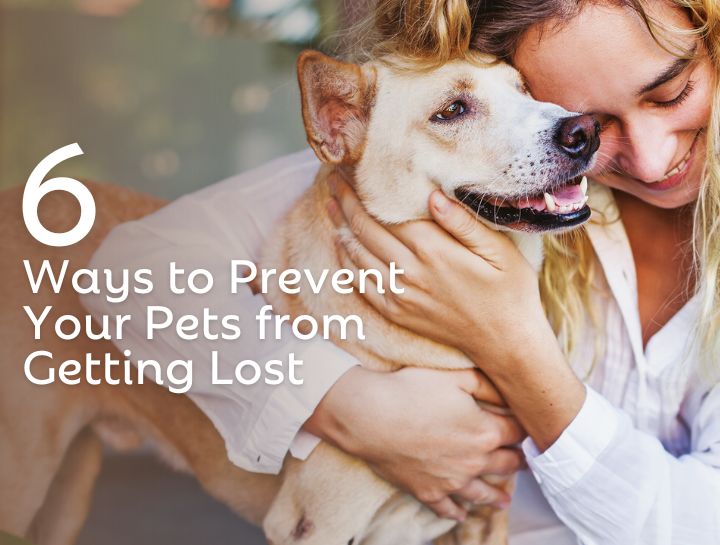
The loss of an animal is one of the saddest experiences you can meet as a pet owner. Your pet is safely at home and the next minute it is gone.
Prevention is always better than cure since pets are always in need of their safety. That is why you can save your pet by learning the appropriate habits which will avoid danger and fear.
Learned in this step wise guide, you would find Lost Pet Prevention Tips that are not only easy to follow but also tested to be effective.
Also, you will read about Lost Pet Recovery and Prevention Tips and Summer Dog Care that will make you always calm and able to act swiftly on the situation in case your pet is lost.
Why Lost Pet Prevention Is So Important
To begin with, pets do not run away. On the contrary, they respond to fear, curiosity, or abrupt changes. As an illustration, pet escape is likely to occur due to loud sounds, open doors, or broken fences.
It is due to this that prevention is a significant concern in guaranteeing the safety of pets. Proactivity will minimize the risks of accidents and injuries and wastage of time as a result of a long search. Your pet and you thus live a more stress free life.
Lost Pet Prevention Tips You Should Apply Immediately
Always Use Proper Identification
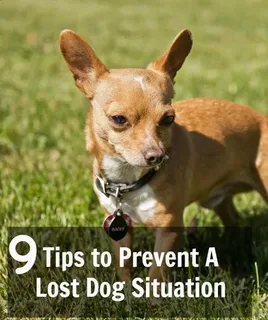
Proper identification is among the best Lost Pet Prevention Tips. All pets must be put in a collar displayed with an ID tag. Your phone number and location should be mentioned in the tag. There is also the aspect of adding a backup number thus enhancing safety.
It is also important to microchip. Collars are prone to falling but microchips are with your pet forever. However, you must change your contact information so that the chip can be effective.
Protect Your Houses and Your Backyards
The second measure is to inspect your yard and your fence on a regular basis. Fix loose boards, seal cracks and make sure that gates are closed.
At home, make your family members remember to keep the doors close particularly when visitors are coming.
In case your pet is always trying to run away, you should use pet gates or walls of the entry points. Subsequently, there is reduced chance of accidental escapes.
Train Your Pet Using Simple Commands
Training allows avoiding a lot of escape. Learn how to teach your pet a command, such as come, stay, wait among others. Train on a daily basis in a relaxed environment so that your pet also reacts even when under stress.
Training that is positive is the best. Hence, use rewards to reward your pet when it behaves well. Trust and safety is developed over time by obedience.
Make Walks Safer Every Day
One should also walk around with your pet on a nice leash and a harness. Use good equipment, as loose clips may easily break. Besides, it is important to check the fit of the pet as they grow or gain weight.
When you are taking your pet out, use walking tracks that are not too busy. This will ease the fear and the possibility of spontaneous escapes.
Lost Pet Recovery and Prevention Tips You Must Prepare For
Accidents may occur despite all the due care. That is why Lost Pet Recovery and Prevention Tips should be prepared.
Create a Simple Lost Pet Action Plan
To begin with, you need to store clear and recent pictures of your pet in your phone. Maintain lists of local shelters, veterinarians and contacts of animal control, also. Emergency response enhances recovery rates.
Discuss this plan with members of the family. Consequently, there is no one who panics as to what to do.
Use Social Media and Local Support
Social media is a potent tool of recovery. Become a member of the neighborhood pet behavior and local community pages. Next, leave the photo and name of you pet and where they were last seen.
Also, request the neighbors to inspect garages, sheds and bushes. Most of the lost pets remain near the house particularly within the first 24 hours.
Contact Shelters and Veterinary Clinics
Make regular visits and calls to shelters around them. Do not be dependent on online listing. Frequently, pets are brought along prior to being announced publicly. Hence face to face visits enhance success.
These are basic steps that are required as Lost Pet Recovery and Prevention Tips every owner ought to know.
Benefits of Following Lost Pet Prevention Tips
Your pet will not suffer severe injuries when you take the precautionary measures. In addition, you lessen stress to you and your family. You save on time, energy and the possible medical expenses as well.
Even more importantly, prevention ensures your pet remains safe, healthy and remains at home.
Mistakes Pet Owners Should Avoid
Always be careful that your pet does not always stick close to you. Well trained pets panic, even when they are well trained. It is advisable not to leave pets alone in the open areas. In addition, do not forget ID tags or postpone microchipping.
If your pet escapes, stay calm. Pursuing or screaming may add to the problem.
Why Routine Helps Prevent Lost Pets
The pets have stability in daily routines. Anxiety is also reduced through feeding, walking and regular playtime at the same time daily. As a result, pets are secure and they are not apt to run.
It is also important to stimulate the mind. Toys, drilling activities and physical activity, inhibit boredom, and minimize escape behavior.
Conclusion
Losing a pet is painful. But prevention has its own management and assurance. With these Lost Pet Prevention Tips and the Lost Pet Recovery and Prevention Tips, you will save your pet and enhance the relationship.
Start today. Lock up, change identification and be aware. Your pet depends on you. To get professional guidance and sound information on all matters relating to pet health, be sure to visit the Animals Pet Health to be one step ahead in ensuring the safety of your pet.
FAQS
How do you ensure that pets are not lost?
Training, secure environments, supervision, and identification are the best strategies to involve. Multiple methods have a greater level of protection.
Does a microchip suffice to help stop the loss of pets?
No. The recovery, and not the prevention, is assisted by microchips. Thus, wear collars and ID tags as well.
What is the speed with which I should act in case my pet is lost?
You should act immediately. The faster the action is performed, the higher a recovery can be successful.
Do pets living inside the homes actually require ID tags?
Yes. Pets kept inside the house may run away. Identification maintains their safety at home.