






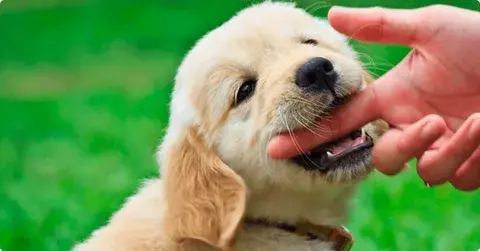
The puppies of dogs are adorable fun and lively. In the event that you own pets in your house, you may have noticed that they bit, scratch or chew on your fingers, hands or even your clothes
In this article we’ll show How To Stop a Puppy From Biting and we will also discuss the related behavior like biting or mouthing.
At the end of this guide you’ll have easy steps that are easy to follow to ensure your puppy’s playing safe and enjoyable. For more advice, visit Animals Pet Health for more information.
Why Puppies Bite
Puppies bite due to a variety of reasons. The majority of the time they are not trying to cause harm. They bite as they learn more about their world. Here are some of the most popular reasons of Mouthing, Nipping and Biting in Puppies.
Puppies Explore With Their Mouth
Your puppy’s mouth functions in the same way that the hands of a baby. They grab objects as they taste and learn through bites. This is what happens in the normal.
Puppies Are Teething
Your puppy’s teeth are growing during the first month of existence. Their gums can feel painful. It helps to feel better. It’s like scratching at an itch.
Puppies Play Rough
As puppies interact with each other, they utilize their teeth. They aren’t aware the fact that your skin is more supple. They believe that you should play exactly the same way.
Puppies Want Attention
If your dog is uneasy and lonely, they could bite, and you may look at them. Saying “no” gives attention. It shows children that biting could cause instantaneous reactions.
How To Stop a Puppy From Biting
Step 1: Stay Calm and Consistent
Your puppy is taught by your manner of speaking and behaviour. If you remain still, your puppy is secure. If you yell or hit your puppy, it becomes afraid. Fear doesn’t teach good behavior. Teaching with calmness is the best way to go.
It is equally important to be consistent. It is essential to respond in exactly the same way each when your pup bites. If you react in a different way your puppy may become confused.
Step 2: Teach Puppy Bite Control
Bite control refers to the way your puppy is taught to make use of their mouths in a gentle manner. If your puppy bites your skin while playing you can use a simple method.
- Speak “Ouch” in a short and clear voice.
- You can stop playing for a short time.
- Turn your back or stand up.
- If your puppy is calm Play with him again.
This will teach the puppy to not bite because it can end the enjoyment. Puppy’s love playing So they learn to avoid biting.
Step 3: Give Chew Toys at the Right Time
Puppies need to have things that are safe and secure to chew on. You can assist your puppy with the help of chew toys, if you notice signs of Mouthing, Nipping and Biting in Puppies when the puppy is young.
- Good Chew Toy Choices
- Soft rubber toys
- Rope toys
- Rings for puppy teething
- Dog stuffed animals
Step 4: Reward Your Puppy for Neat Behavior
The course of their learning is less as you continue to offer them praise. If your puppy is peaceful or is playing with no bites or making noises.
If you notice your puppy is quiet, you can tell them “Good” to them and give them an occasional treat. This is a way of instructing that your dog to become kind in the hopes of getting nice things.
Step 5: Give Your Puppy Enough Exercise
Puppy puppies are full of energy. If they’re feeling bored or bored, and the only remaining thing they have to do is eating then they’ll chew more.
- Easy Ways to Release Puppy Energy
- Play with your toys
- Do short walks
- Learn simple tricks such as “sit” or “stay”
- Make use of puzzle toys that can are able to hide treats
The exercise routine can help your puppy relax. An unagitated puppy will be less likely bit or nip at you.
Step 6: Avoid Rough Play
Choose gentle games instead. Help your puppy learn to play with toys and instead of your fingers. Utilizing treats and praises as a method to train your puppy to select the right options is the way to go.
Step 7: Socialize Your Puppy Early
Socializing is that your puppy gets to experience new places, people and dogs that are friendly. When your puppy plays in a group with others, they develop more appropriate habits.
Others puppies may yell or stop playing if they are bites too in a way that is too hard. This is a way to train bite-control.
Your puppy should attend puppy classes or to play sessions with your puppy. Make sure you guide them while playing so everyone can feel safe.
Step 8: Exercise patience and persevere with the training
In order to stop the puppy from biting could take a while Puppy puppies require practice to master gentle behavior. If you are in the moment and teach your puppy your puppy, it will get better. Every little step can make an impact.
Keep in mind that puppies want to delight you. They pay attention to your your physique, as well as your mood. If you give clear guidance, your puppy learns quickly.
When To Ask a Professional for Help
The majority of biting behavior in puppies is commonplace. An experienced dog trainer or behaviorist is capable of teaching you other methods. Helping your dog early will keep everyone secure and content.
Final Thoughts
At the end you will get answer about How To Stop a Puppy From Biting . Puppy biting is also healthy, but does not necessarily have to be permanent. With some knowledge of Mouthing, Nipping and Biting in Puppies, positive reinforcement, the redirection of attention and bite-inhibition, you can have a sweet, good-mannered puppy.
To keep in mind: the secret of success is consistency, patience and soft training. As time goes by, your puppy will know how to play without biting and you together and your furry companion will be content.
If you want more useful tips and trustworthy advice about puppies’ health and behavior, make sure to visit the Animals Pet Health site.
FAQS:
Why does my dog get so bitten?
Your puppy eats when they are curious about the world through their mouths. They could be teething, or even looking to have fun.
How long will the process take for you to end a a puppy from biting?
The majority of puppies develop better habits in just a few weeks of consistent practice on a daily basis and.
Should I discipline my dog for biting?
No. Punishment creates anxiety. Instructing, guiding, as well as rewarding positive behavior is much better.
What can you do in the event that my dog has bitten too hard?
“Ouch,” say “Ouch,” stop play and give the child chew toys or use a short time-out.
How do I contact help?
If your puppy snarls in anger or is not improving in time, a reputable trainer can provide extra assistance.